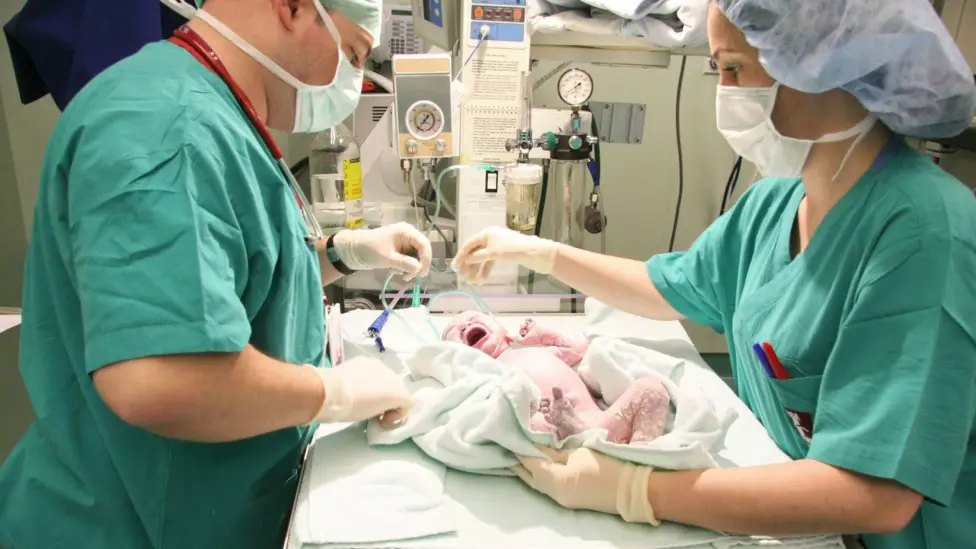
England Sees Quarter of All Births Become Emergency Caesareans, Up Eight Percentage Points
A quarter of all births in England are now delivered by emergency caesarean operations, an increase of eight percentage points over the last five years. While planned caesareans have also risen, the rate of vaginal births without instruments has fallen from over half to 43% of all deliveries.
Professor Marian Knight, director of the National Perinatal Epidemiology Unit, described this as a "total change in how women give birth" in England, noting that other European countries have not experienced a similar trajectory. While NHS England states that "decisions are made by considering individual circumstances and clinical advice," a definitive explanation for the surge remains elusive due to the absence of public data on the reasons for emergency C-sections.
Some professionals suggest that a culture of fear within maternity units and among pregnant women may be contributing to the increased number of procedures. The Royal College of Obstetricians and Gynaecologists highlights the considerable pressure on staff and operating theatres, indicating that the system is "really struggling" to cope with heightened demand.
Despite the rise in emergency caesareans since 2020, stillbirths and neonatal mortality rates have remained largely stable. Professor Shakila Thangaratinam of the University of Liverpool expressed concern if such increases are not accompanied by a corresponding decrease in adverse outcomes for mothers and newborns, advocating for "good quality data" to understand the phenomenon. She also pointed out that emergency C-sections occur in approximately one in three births for Black and Asian mothers, compared to the national average of one in four, suggesting potential racial disparities.
Professor Knight is investigating factors like maternal age, obesity, and pre-existing medical conditions, but also implicates the impact of high-profile maternity scandals. Legal claims against the NHS for maternity issues have risen by 11% over five years, with cases frequently questioning delays or omissions in performing caesareans. This suggests a systemic inclination towards intervention, as doctors and midwives are seldom criticised for early caesarean interventions.
Economically, an emergency C-section is estimated to cost nearly £9,000, significantly more than a planned caesarean at £6,000 or a routine vaginal delivery at £4,800. Dr Alison Wright, President of the Royal College of Obstetricians and Gynaecologists, voiced apprehension about the capacity of services to adapt, warning that without investment in workforce and theatre capacity, the ability to perform necessary emergency caesareans may be compromised.